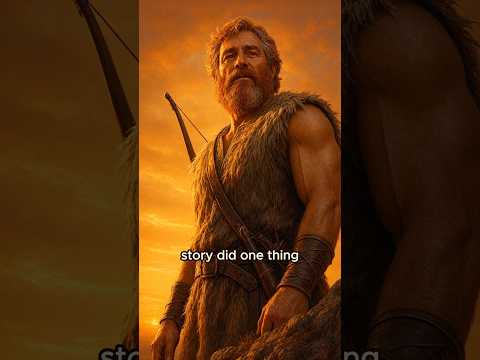
Esau sold his birthright for a bowl of lentil stew. The Talmud says the stew was a mourning meal, cooked the day Abraham died. A story about trading what lasts forever for what you want right now.
A starving young man trades the most valuable thing he owns… for a bowl of soup.
But the TalmudSay it: TAHL-moodA huge collection of discussions by the early rabbis about Jewish law, stories and ideas, written down around 1,500 years ago.Open the glossary says the strangest part… is why the soup was cooking.
Jacob and Esau are twins, fifteen years old. Esau hunts in the fields. Jacob stays home.
One day, Jacob is cooking red lentil stew. Esau comes in from the field, worn out.
He says: Give me some of that red stuff. I’m exhausted.
Jacob says: First, sell me your birthright. The firstborn’s double share.
Esau says: Look, I’m going to die. What good is a birthright to me?
He swears. He eats. He drinks. He gets up… and walks away.
The Talmud says that same day, their grandfather Abraham died.
Jacob isn’t making dinner. It’s the first meal for his grieving father, Isaac.
Why lentils? RashiSay it: RAH-sheeRabbi Shlomo Yitzchaki (1040 to 1105), a teacher in France who wrote the most widely read explanation of the Torah, verse by verse.Open the glossary says they’re round, like a wheel. Because sadness comes around to everyone.
The whole family is crying over Abraham. Esau is thinking about his stomach.
Forever is right in front of him. And he picks the soup.
Maybe one day, you’ll stand where Esau stood. Your kid wants you to play, and you say: In a minute. Then you scroll your phone for an hour. You’re fighting with someone you love, and one mean sentence would win. So you say it.
Don’t trade what lasts forever for what you want right now.
The soup is gone in five minutes. What he sold… is gone forever.
Every teaching above comes from these texts. The Torah comes first, then the teachers who explain it. Each link opens the text in Hebrew and English on Sefaria, a free online library. How we choose and label sources.
Isaac and Rebecca prayed for a child for twenty years. The Torah tells us how long they waited, and the classic teachers tell us how they prayed. Here is their story, and what it teaches about waiting.